
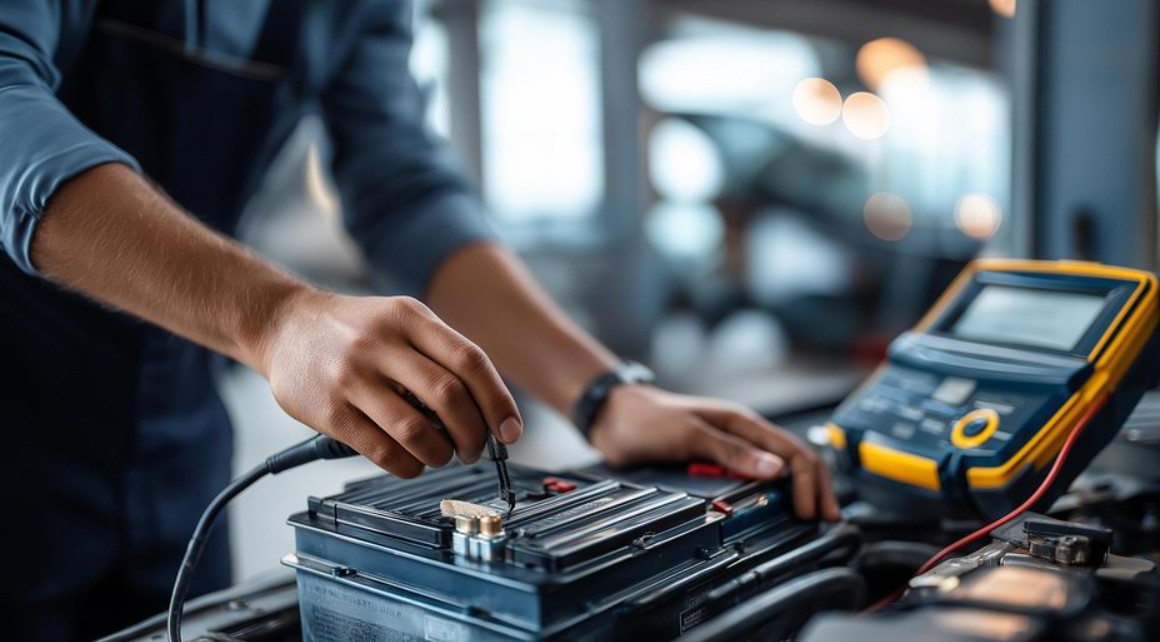

For decades, both consumers and professional mechanics have followed simple, predictable rules for consumer vehicle maintenance. For example, a vehicle heading into long-term storage was hooked up to a traditional trickle charger to maintain the battery. Trickle chargers were considered the gold standard back in the day. They kept a battery from dying while sitting idle in a garage. But things have changed.
Automotive electrical systems have become more sophisticated in the 21st century. Battery chemistry has become more complex. As well as trickle chargers worked back in the 1980s and 90s, they have some inherent weaknesses that make them impractical for modern vehicles.
Today, professional mechanics and informed consumers are passing on legacy trickle chargers in favor of more advanced multi-phase charging systems. Multi-phase charging is superior to trickle charging every single time.
Table of Contents
Trickle Charging: The Basics
Trickle charging is simple enough to understand. A legacy charger is a dumb device that delivers a constant, low-amp electrical current to the battery. It’s typically between 0.5 and 2.0 amps. Here is the problem: a trickle charger doesn’t have a built-in feedback mechanism.
Without feedback, the device has no way of measuring state of charge, internal temperature, or even chemistry type. It keeps pushing current whether the battery needs it or not. This is less than ideal because it can lead to:
- Electrolyte boiling and internal damage.
- Permanent plate grid corrosion.
- Thermal runaway (resulting in swelling and cracking).
Modern batteries are more susceptible to these problems than their older counterparts. That’s why it is better to invest in a battery charger with multi-phase charging.
How Multi-Phase Charging Works
Clore Automotive, makers of smart battery chargers with multi-phase capabilities, explain that multi-phase charging is a more intelligent way to maintain battery health and capacity. Multi-phase charging is based on analyzing battery feedback.
A smart battery charger is a dynamic, microprocessor-controlled unit. It constantly communicates with the battery to get information about electrical resistance and other properties. In so doing, a typical smart charger utilizes a four-step, phased charging process:
1. Diagnostics and Soft-Start
The first phase begins with battery diagnostics. After the charger analyzes the battery’s health, it determines the best way to begin charging. A deeply discharged or heavily sulfated battery is best served with a gentle, low-voltage current that brings internal cells up to a normal operational threshold.
2. Bulk Charge
Phase two is the bulk charge phase. This is where the charger delivers maximum current to bring the battery up to about 80% capacity in a fairly short amount of time. Bulk charging can be completed in just a couple of hours in most cases.
3. Absorption
The third phase is the absorption phase. This is where the voltage is maintained at a constant level while the current is gradually tapered. It allows the battery’s cells to fully, safely, and efficiently absorb energy. The risk of overheating is kept to a minimum here.
4. Maintenance and Rest
Finally, the maintenance and rest phase kicks in once the battery reaches full capacity. Rather than continually sending a trickle charge, the smart charger shuts off and allows the battery to rest. It periodically re-engages to measure charge level. When that level drops below a certain threshold, the unit kicks in to recharge the battery.
Among the many benefits of smart charging is allowing a car battery to perform as it normally does when it’s used all the time. By simulating real-world use, a smart maintainer limits sulfation, extends battery life, and guarantees the battery is ready to go whenever it is needed. Clearly, multi-phase charging is superior to trickle charging.