
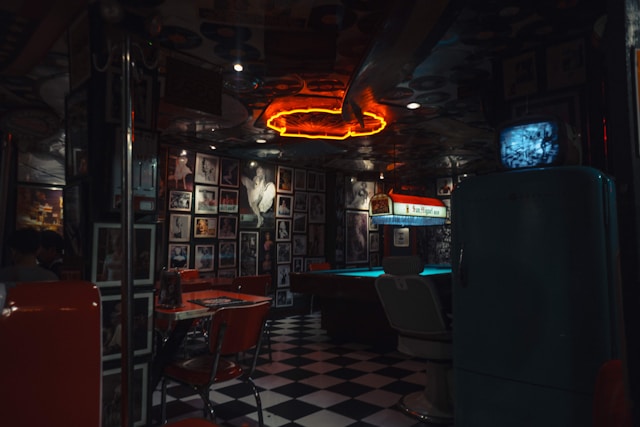

Tech gatherings flourish in environments that gently disrupt routine thinking. Great ideas rarely appear in the same rooms where long hours already blur into one another; they surface when people are nudged into new mental territory. That’s why certain spaces—unexpected ones—are gaining traction among developers and student creators. When the venue itself shapes energy and mindset, the event becomes more than a schedule; it becomes a catalyst.
Table of Contents
1. Post-Game Integration: Challenge Spaces That Refresh Creative Reasoning
After an intense coding sprint, the worst thing is to drop straight into silent downtime. Minds stay locked in the same cognitive loops. But stepping into a challenge-based environment—something playful, something alive—breaks the mental static.
Well-designed Calgary Escape Rooms do this effortlessly; their sensory cues, puzzle flow, tactile mechanics, and quick-fire decision moments pull people out of tunnel vision and into a different cognitive rhythm. Not to compete, but to reset. To shake off the heavy analytical patterns and stir the neural pathways that get overlooked during long hours of coding.
For many project teams, this shift becomes the spark point where insights surface unexpectedly—after the pressure drops but before momentum slips away. It becomes a natural “creative reset,” especially helpful when stubborn bugs or design blocks have drained morale.
2. Layout and Logistics: What Makes an Escape Room Venue Functional for Tech Events
When event organizers assess a venue, they’re really evaluating whether the space understands the tempo of technical work. Escape-room facilities—surprisingly—often carry the backbone needed for productive hackathons because they’re built for coordination, timing, and multi-room flow.
What matters most is the underlying infrastructure:
- High-capacity Wi-Fi supporting dozens of devices
- Ample, evenly distributed power access so teams don’t cluster around outlets
- Flexible display options for rapid prototypes, storyboarding, and code reviews
- Sections that can be acoustically isolated for concentrated work
Because escape venues already manage simultaneous groups moving through timed challenges, their layout often adapts naturally to intensive creation cycles. With minimal adjustments, organizers get both atmosphere and operational smoothness.
3. Gamified Networking: Using Micro-Puzzles to Make Collaboration Feel Natural
Networking can be uncomfortable in tech spaces—too formal, too forced, or too dependent on self-promotion. Micro-puzzles provide an alternative. They’re short, playful, and strategically scattered around the venue so participants bump into challenges the same way they bump into potential collaborators.
This turns introductions into shared discovery rather than rehearsed conversations.
Organizers see benefits like:
- Organic pairing based on problem-solving chemistry
- Designers, coders, and writers connecting through instant collaboration
- A less intimidating entry point for first-timers or students
Instead of “speed networking,” participants experience “skill-based mingling”—which creates sharper team formation for the main jam or hackathon. People talk because they’re engaged, not because a schedule told them to.
4. Case Study: Indie Dev Breakthrough — When a Venue Shift Unlocked a Student Team’s Vision
A student team developing a narrative puzzle-platformer reached out after weeks of stalled progress. They weren’t lacking talent; the issue was creative fatigue. Their ideas were blending into the same white-boarded walls they stared at all semester. Moving their work session into an escape-room venue changed the dynamic instantly.
Between coding intervals, they wandered themed rooms—absorbing spatial pacing, tension arcs, environmental cues, and object-trigger logic. They didn’t analyze these elements; the environment taught them indirectly. Within a day, they restructured their level flow, resolved narrative inconsistencies, and rebuilt their puzzle logic with clarity that had eluded them for weeks. The venue didn’t give them answers; it gave them perspective.
In essence, escape-room venues aren’t just cool spaces—they’re creative interrupters. They dismantle the monotony that kills innovation and replace it with tension, atmosphere, and mental awakening. For tech teams, students, organizers, and indie developers, these spaces don’t merely support breakthroughs. They provoke them. And in the world of creation, that’s everything.
Want to learn more? Check out our blog.