

If you think about Bhutan, what comes to mind? Stunning landscapes, breathtaking monasteries, and a commitment to sustainability. But there’s another, often overlooked, force driving the nation’s success: Buddhism. This ancient practice isn’t just something that people in Bhutan follow—it’s embedded in the country’s DNA. It plays a key role in maintaining the country’s famed peace and stability, making Bhutan one of the most tranquil places on Earth.
In a world increasingly divided by politics, war, and social unrest, Bhutan stands out as a shining example of how a deeply ingrained spiritual philosophy can shape a nation’s future. But what exactly is it about Buddhism that makes Bhutan so peaceful and stable? Let’s break it down.
Table of Contents
1. The Heart of Bhutanese Society: Buddhism as a Way of Life
More Than Just Religion
When you step into Bhutan, it’s hard to ignore the omnipresence of Buddhism. It’s not just confined to temples or prayer flags; it’s a part of everyday life. Whether you’re hiking in the Himalayas, chatting with locals at a market, or visiting a school, Buddhist values are interwoven into the fabric of society. And this is what sets Bhutan apart.
Buddhism teaches compassion, non-violence, and mindfulness—values that directly influence how people interact with one another and with the environment. When a nation’s collective mindset is built on these principles, you begin to see why Bhutan remains one of the world’s most peaceful countries.
In Bhutan, the spiritual teachings of Buddhism promote mental well-being, encourage ethical living, and cultivate a sense of interconnectedness. This approach to life nurtures a deep sense of collective responsibility, which has helped maintain peace and harmony across the country for centuries.
The Role of Buddhist Monasteries
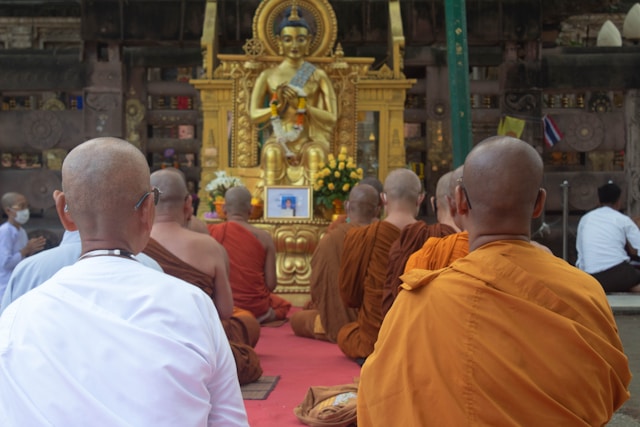
Buddhist monasteries play a major role in maintaining Bhutan’s peace. These are not just places for prayer—they are community centers where people come together to learn, reflect, and grow spiritually. The country has over 2,000 monasteries, with many serving as peaceful sanctuaries for both locals and visitors alike.
Monks, often revered as spiritual guides, are deeply respected by the Bhutanese people. Their teachings encourage citizens to practice patience, humility, and respect for all life forms, which directly contributes to a peaceful, non-confrontational culture.
2. The Influence of Buddhist Philosophy on Governance
The King’s Role: The Monarch as a Spiritual Leader
Bhutan’s political system is unique. Unlike many other monarchies, where the king’s role is largely ceremonial, Bhutan’s monarch plays a more active part in shaping the nation’s future. And this influence is deeply rooted in Buddhist philosophy.
The country’s former king, Jigme Singye Wangchuck, famously introduced Gross National Happiness (GNH) as a measure of Bhutan’s success, with its foundation built on Buddhist teachings. GNH isn’t just about economic growth—it’s about spiritual well-being, cultural preservation, and environmental sustainability.
When you base national policy on the concept of happiness, rather than raw economic power, it’s a whole new ballgame. It’s about ensuring that Bhutan’s growth benefits everyone, not just a select few. This Buddhist-inspired framework encourages the government to focus on creating conditions for long-term peace and stability, rather than short-term gains that could disrupt harmony.
Non-Violence in Governance
Buddhism’s core tenet of ahimsa, or non-violence, is reflected in Bhutan’s approach to governance. The nation doesn’t rely on military strength to maintain its power. Instead, its commitment to peace is reinforced by its diplomatic efforts and neutrality. Bhutan has historically maintained a peaceful relationship with its neighbors, and its foreign policy is centered around promoting harmony rather than conflict.
This Buddhist principle of peacekeeping extends to the country’s legal system as well. While Bhutan does have laws, they emphasize rehabilitation over punishment and community healing over retribution. This aligns with the Buddhist idea that people can change and evolve—nurturing peace by focusing on rehabilitation, not revenge.
3. Buddhism’s Role in Environmental Conservation
Harmony with Nature
One of Bhutan’s most remarkable achievements is its commitment to environmental conservation. And once again, Buddhism is at the core of this philosophy. In Buddhist practice, there is a deep respect for the interconnectedness of all living beings—humans, animals, plants, and the environment. This belief shapes Bhutan’s environmental policies, which are arguably among the most forward-thinking in the world.
Bhutan’s government has enshrined in its Constitution the requirement to maintain at least 60% of the country’s land under forest cover, ensuring that future generations inherit a green, sustainable environment. The country has also pledged to remain carbon-negative, absorbing more carbon dioxide than it emits. This commitment to the environment is directly inspired by Buddhist teachings on the sacredness of all life forms.
Additionally, the practice of compassionate conservation in Bhutan focuses on protecting both biodiversity and the well-being of the people. The government works to ensure that all conservation efforts are in balance with the needs of local communities, creating an eco-friendly and sustainable way of life.
Buddhism’s Ecological Wisdom
Buddhism encourages people to see themselves not as masters of nature, but as part of it. This wisdom has led Bhutan to prioritize sustainability in every aspect of life, from its organic farming initiatives to its carbon-negative status. This ecological mindset goes beyond policy—it’s ingrained in the way the Bhutanese live and interact with their environment, creating a peaceful, symbiotic relationship between humanity and nature.
4. Buddhist Values in Bhutanese Social Life
Community-Centered Living
Bhutan’s society is deeply rooted in the Buddhist value of community. Bhutanese people place a strong emphasis on cooperation and mutual support. In Bhutan, communities often come together to celebrate religious festivals, perform rituals, and support one another through challenging times. This sense of belonging and interdependence fosters a strong, peaceful social fabric.
Bhutan’s cultural festivals, like Tshechu, are an important part of social life. These celebrations bring people from all walks of life together, reinforcing the sense of community and shared purpose. The teachings of Buddhism are often at the heart of these festivals, reminding the Bhutanese of the importance of harmony, unity, and compassion.
Respect for Elders and Authority
In Bhutan, respect for elders and authority is deeply ingrained. This respect stems from Buddhist values of reverence, humility, and the acknowledgment that wisdom comes with age. This societal respect creates a stable social structure, where individuals are more likely to peacefully resolve conflicts and work toward common goals.
5. Buddhism’s Impact on Bhutan’s Peace and Stability
All of these elements—spiritual teachings, governance, environmental practices, and social cohesion—work together to create a country where peace is not just a goal, but a way of life. Bhutan, under the guidance of Buddhist principles, has avoided many of the conflicts and challenges faced by other nations. The result? A society that prioritizes the well-being of its people, its culture, and its environment—creating a level of stability rarely seen in other countries.
Conclusion: A Blueprint for the World
Buddhism has provided Bhutan with more than just spiritual guidance—it has given the country a roadmap for peace and stability. By intertwining Buddhist values with governance, environmental policy, and social life, Bhutan has created a society where happiness, compassion, and respect are the cornerstones of national development.
As the world continues to grapple with issues like conflict, inequality, and environmental degradation, Bhutan’s peaceful and stable model offers a refreshing blueprint for how we might approach national success. The lessons of Bhutan’s Buddhist-inspired policies show us that true stability doesn’t come from power or economic growth—it comes from inner peace, compassion for others, and a deep respect for the planet we share.
Want to learn more? Check out our blog.